
Sometimes a delivery shows up right by your door. When it does, you wonder if you chose the right plan. People bring this up a lot when they are looking at moving Auckland. On a narrow road, it can feel harsher because the van or truck has no easy way to pull off quickly. If you are in an apartment, the wait can take even longer. A steep driveway makes it more awkward too. After a while, the day feels tired, heavy, and off. The good news is that experienced house movers deal with this regularly, and a lack of direct parking rarely stops a move from going ahead; it just takes a bit more planning. This article, from the team at Auckland Kiwi Movers, explains how that planning works.
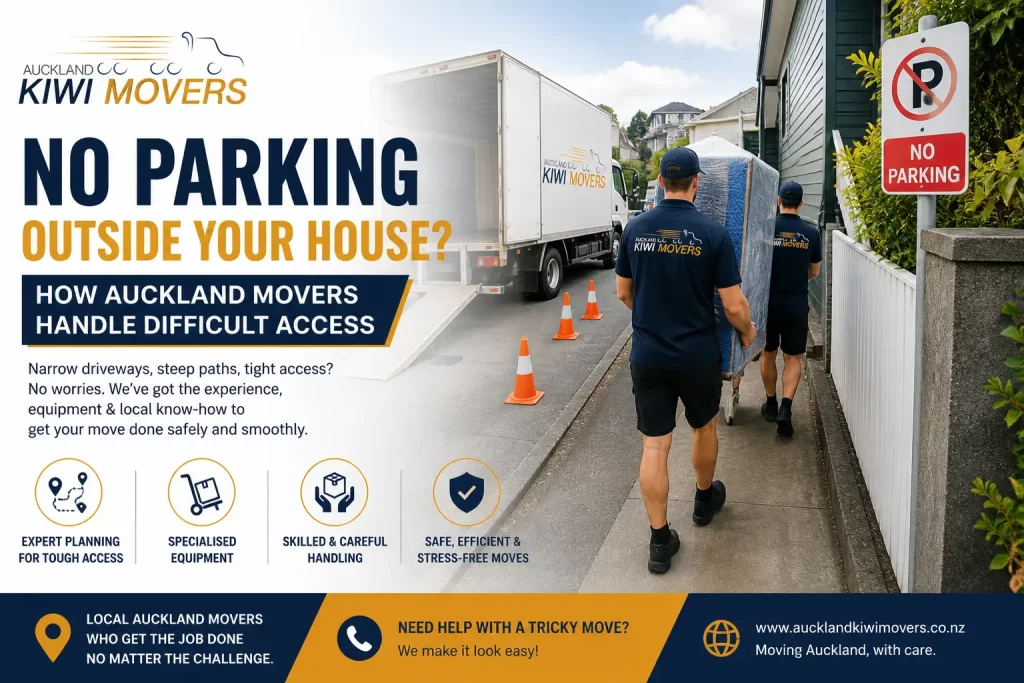
Can Movers Move a House If There Is No Parking Outside?
Yes, usually. If there is no parking right in front of your place, that does not always block the move. Most movers will stop the truck in the closest workable spot. Then they move furniture and boxes back and forth between the house and the truck. How this is done can change. It depends on the layout of your property, the state of the road, and any access problems. Because of that, let your movers know about entry or access issues ahead of time, before moving day.
In practice, this means a moving crew looks at what’s actually available near your home a driveway, side street, loading zone, or the closest legal kerbside spot and works out a sensible route from there. For house movers Auckland, teams handle this regularly; it’s a normal part of the job.
What usually changes is the process, not whether the move happens at all: the truck may be positioned further away, items may need carrying a longer distance, and extra time may be needed depending on distance and volume. An access assessment beforehand helps the crew prepare properly, rather than working it out on the day.
Why Parking Matters on Moving Day
How far the truck is from the building matters. When it sits near the front door, the job feels easier. Each trip ends sooner. The crew does not have to walk as far. That means boxes and furniture move from A to B faster. The day also feels more even. You see fewer pauses. The back and forth slows down less.
If parking close is not possible, the problems start quickly. Taking boxes on and off takes more time. Each trip also adds a longer walk, so the timing slips. It becomes slower and harder to carry everything. Bigger, heavier items need extra care, especially over a longer route. That can reduce how many trips the crew can squeeze into the time limit. By the end, the total work done is lower. There is also a higher chance of damage. A longer carry adds more chances to bump into walls, doorframes, or gates.
As a simple example, a sofa carried ten metres to a kerbside truck will always take less time and effort than the same sofa carried fifty metres down a driveway. The item doesn’t change; the distance does, which is why an accurate picture of your property’s access is so useful before your moving company arrives.
Common Difficult Access Problems Auckland Movers Deal With
Every property is different, and Auckland’s mix of housing styles means moving crews deal with a wide range of access challenges.
No Parking Outside the Property — Some homes simply don’t have space for a truck directly outside. The crew identifies the next best option and plans the carry from there.
Narrow Residential Streets — Many Auckland streets are narrow, with cars parked on both sides, which can limit truck size or mean parking further away.
Steep or Narrow Driveways — A steep driveway can make truck access unsafe, and a narrow one may not fit a larger vehicle. Even a partial climb can slow down carrying.
Long Driveways — A driveway that stretches well back from the road adds distance to every trip and is one of the more common causes of a genuine long carry.
Apartments and Limited Building Access — Is there a loading zone, how far is it from the entrance, is there a lift, and how many floors are involved? Building rules can also affect when a crew can operate.
Stairs and Multiple Levels — Stairs add physical demand and time, particularly for heavy furniture, with multiple flights or tight stairwells slowing things further.
Limited Loading Areas — Some properties have very little space to stage items before loading, which means the crew needs a tighter, more organised process.
Busy Roads and Auckland Traffic — Movers may need to consider traffic flow, visibility, and how long a truck can safely stay stopped, plus timing between properties.
How Do Movers Handle Difficult Access?
A structured approach helps keep things efficient even when access is genuinely difficult.
Step 1: Assess the Property Access — Movers benefit from knowing about parking availability, driveway width and slope, stairs, building access, and narrow points along the route.
Step 2: Identify the Nearest Suitable Truck Position — Rather than guessing on the day, an experienced crew works out the most practical parking or loading position in advance.
Step 3: Plan the Carrying Route — The crew maps out the safest, most efficient path from the property to the truck, factoring in gates, steps, corners, and obstacles.
Step 4: Protect Furniture — Longer carries and awkward routes increase the chance of scuffs or damage, so furniture is wrapped, padded, or handled with extra care where the route warrants it.
Step 5: Organise Loading — Boxes and furniture are moved in a logical sequence, which keeps the crew efficient even when each trip covers more ground.
Step 6: Repeat at the Destination — Access planning isn’t a one-off task; the same assessment, positioning, and route planning happens again at the new property.
What Is a Long Carry When Moving House?
A “long carry” simply describes a situation where movers have to carry furniture and boxes a significant distance between the property and the truck, because the truck can’t be positioned close to the entrance.
It can affect moving time, since more distance per trip naturally slows the job; the number of trips the crew makes; physical workload, since heavy furniture over greater distances is more demanding; crew requirements; and total cost, where pricing is time-based.
Not every moving company Auckland residents compare handles long carries the same way, and not all apply a separate fee for it. It’s worth asking your movers directly how a long carry or difficult access is reflected in your specific quote.
Does Difficult Access Increase Moving Costs?
It can, but not automatically. Difficult access, a long carry, stairs, a steep driveway, or restricted parking can increase the time needed for a move, and where pricing is time-based, this may affect total cost. It doesn’t mean every difficult-access move costs more, or that every company charges the same way.
Several factors influence whether cost is affected: carrying distance, stairs or multiple levels, driveway width and slope, where the truck can realistically be positioned, furniture volume, crew size, and loading complexity.
There’s an important difference between additional time on a time-based quote, a specific access-related fee some companies may apply, and a standard quoted service that already accounts for access. Since this varies between providers, confirm the pricing structure with your moving company before booking.
What Should You Tell Movers Before Moving Day?
Before you make your move, have a quick chat. It can save you from last-minute guessing.
- Try to cover a few things:
- where parking is, and if it is open
- how far the truck area is from your front door
- how wide your driveway is, and if it slopes
- steps to the door
- lift access and which floor you are on for flats
- any limits on loading times
- any tight spots, like narrow gates or doors
- bulky or heavy pieces
- any hard routes for long carries
If you can, send a few photos or short clips of the driveway, the entry, or the access to the building. The crew can see the situation better than from words alone.
What Happens If the Moving Truck Cannot Park Outside?
Even though each home is unique, a move with hard access often goes like this. First, the crew shows up and checks how they can reach the door that day. Next, they park the truck in the closest workable spot. Then they bring furniture and boxes over to the truck, one trip at a time. After that, they load everything in a steady order. Once the load is secure, the truck drives to your new place. When they arrive, they check access again at the destination. Finally, they unload and set items where you and the team agreed in advance.
The timing can shift based on your setup. So use this as a rough outline, not a strict checklist.
How Can You Prepare for a Difficult-Access Move?
A little preparation goes a long way when access is limited: tell your movers about access problems as early as possible, take photos of driveways or tricky areas, clear pathways of anything in the way, remove obstacles like bins or garden furniture, keep boxes packed and ready, empty drawers in larger furniture where appropriate, keep children and pets away from the moving route, confirm apartment or building access in advance, check parking or loading arrangements near both properties, prepare a simple furniture inventory for larger moves, and flag any heavy or oversized items ahead of time.
Does Crew Size Matter With Difficult Access?
Crew size can make a real difference to how efficiently a difficult-access move runs, particularly with heavy furniture, multiple flights of stairs, long carrying distances, a large volume of items, or a tight moving window.
There isn’t a single crew size that suits every situation. The right number depends on volume, access, furniture type, carrying distance, and time available — which is why an access assessment beforehand helps your moving company recommend a crew size that actually fits your property, rather than a generic default.
Difficult Access Moving Checklist
| Access Issue | What to Tell Movers | Why It Matters |
| No parking | Nearest practical parking location | Carrying distance |
| Narrow driveway | Width/access details | Truck positioning |
| Stairs | Number of levels | Labour and time |
| Long driveway | Approximate distance | Carrying time |
| Apartment | Floor/lift information | Building access |
| Heavy items | Type and approximate size | Crew planning |
Questions to Ask Movers Before Booking
- Can you handle a property with no parking directly outside?
- How do you estimate moving time?
- Can difficult access affect my quote?
- Is there a minimum booking time?
- What crew size do you recommend for my situation?
- What truck size is suitable for my move?
- Should I provide photos of the access beforehand?
- Are stairs considered when estimating the move?
- What happens if the truck has to park further away than expected?
- Are there any additional charges I should know about?
- How should I prepare a narrow driveway before moving day?
- What information do you need from me before providing a quote?
Example: Moving From a Property With Difficult Access
Illustrative Example — Not a Customer Case Study
Picture a home with no parking directly outside and a narrow street that only allows the truck to stop some distance away. The crew assesses access, positions the truck at the nearest practical spot, and carries furniture a longer distance along a planned route, protecting items along the way. The job may take somewhat longer than a straightforward, close-parking move. Actual conditions vary by property—this example illustrates the general process, not a guaranteed outcome.
Frequently Asked Questions
Yes, in most cases. Movers will typically position the truck at the nearest practical location and carry items from there.
It can, if pricing is time-based, since a long carry takes more time. Not every company charges a separate fee, so confirm this when getting your quote.
Usually, though, the approach depends on the property. A steep or narrow driveway may mean the truck parks further away, adding to the carrying distance.
Yes. Stairs add physical demand and generally slow down loading and unloading, especially for heavy furniture or multiple flights.
They can affect where the truck parks and how the crew plans loading, particularly on busy roads. Check any local requirements before moving day.
It’s a good idea. Photos or short videos of driveways, entrances, or stairs help the crew plan before they arrive.
Mention parking availability, driveway width and slope, stairs, lift access, and any known long carries — see the checklist above for a full list.
Final Thoughts
No parking outside your house doesn’t automatically mean your move can’t happen; it usually just means your movers need a bit more information and a clear plan. Truck positioning, long carries, stairs, and driveway conditions all play a part in how a difficult-access move is handled, and can influence moving time and, in some cases, cost. The best way to avoid surprises is to disclose access challenges early, ask how they affect your quote, and confirm the details before booking.
Whether you’re comparing removalists Auckland-wide or you’ve already chosen your moving company, being upfront about parking, stairs, or a tricky driveway helps everyone plan a smoother day. As local movers Auckland families and renters have relied on for house moves and furniture removal, Auckland Kiwi Movers is used to working through exactly these kinds of access challenges.
Dealing with limited parking, stairs, a steep driveway, or another difficult-access situation? Auckland Kiwi Movers can discuss your property access and moving requirements so you can plan your move with fewer surprises. Get in touch for a moving quote.