
A long distance move is one of those major life transitions, and there is no better way to kill the excitement than opening a box that promises your grandmother’s vase, only to find it in pieces or worse yet, wine glasses turned into confetti. The harsh reality is that, for the most part, breakages during transit can be easily avoided. That boils down to prep, proper materials, and actually getting a grasp on why professional movers pack like that.
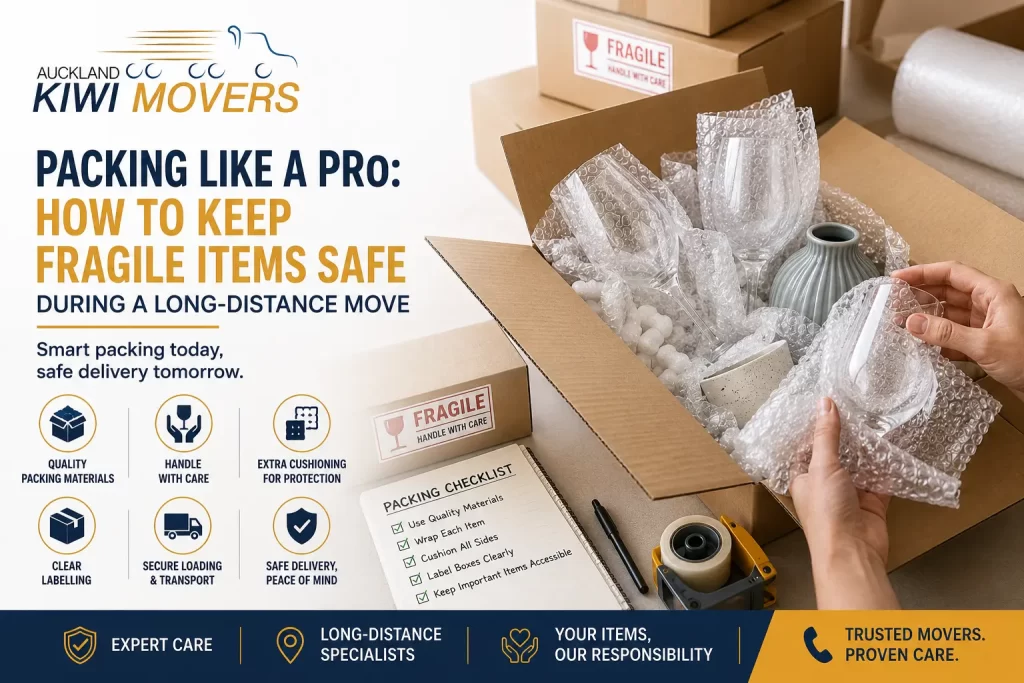
Whether you are moving from Auckland to Christchurch or just moving business goods across the country, this article provides you with all the delicate property packing advice that professionals use and also antidotes for common errors that sabotage otherwise excellent possessions to the rubbish bin.
Why Long Distance Moves Demand a Higher Standard of Packing
Most of the time, a Local move goes wrong, which jeopardises us. You have long-distance, but bit off more than you can chew, and moved it the hard way. Things are shipped around more, cycled through more hands, and spent longer piled in a moving truck bouncing down hundreds of kilometres of road. This doesn’t happen on a short distance driving to the next suburb because vibration, change of weight, temperature, and being stopped suddenly all work against fragile items that are shipping from a guy down the road.
This is why wrapping fragile items for a long distance move cannot simply be done with “wrap it in paper and pray”. It requires a deliberate system from box selection to how you position items inside the truck.
Step 1: Gather the Right Packing Materials Before You Start
There are few at-home packing disasters more common than running out of bubble wrap and improvising halfway through the process, which automatically leads to breakage. Stock up generously before you begin.
What professional movers use:
- Double-walled cardboard boxes — far more resistant to compression than standard single-wall boxes
- Bubble wrap — for individual wrapping; buy more than you think you’ll need
- Packing paper (unprinted) — newsprint ink transfers and can stain; use clean white packing paper instead
- Foam sheets or foam pouches — ideal for glassware and electronics
- Packing peanuts or crumpled paper — fill dead space inside boxes to prevent shifting
- High-quality packing tape — reinforce every seam and the base of each box with at least two strips
- Permanent marker — for clear labelling
Never wrap delicate products or items in second-hand boxes. They are also less stable and more prone to buckle under weight.
Step 2: Wrap Every Item Individually — No Exceptions
This is the #1 rule of professional packing: every delicate item gets its own layer of protection. Two glasses will bang together in transit, and one or both will break. This applies even to items that seem durable.
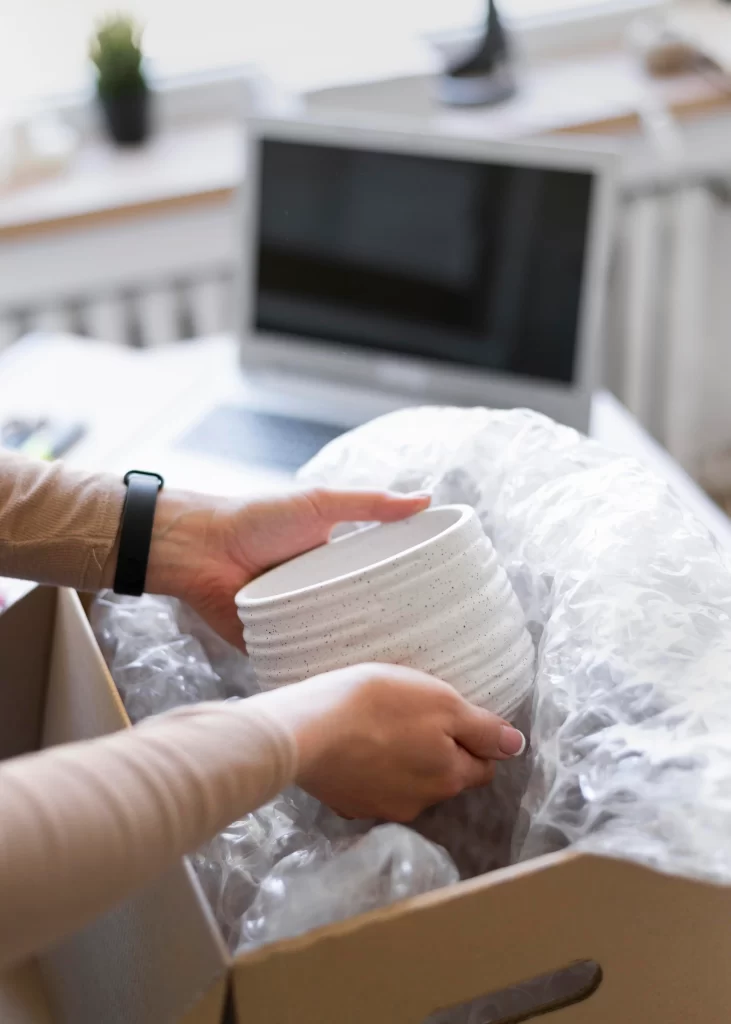
The correct wrapping method:
- Lay a sheet of bubble wrap or packing paper flat on a surface
- Place the item in the centre at an angle
- Wrap the nearest corner over the object, and then roll it tight
- As you roll to tuck in the sides and secure any loose wrap with tape
- Wrap fragile items (such as crystal, ceramics) in bubble wrap and then double up with a second protective layer.
This is important for any items that have odd shapes, like vases, sculptures, and decorative pieces. Fill the hollow insides with crumpled packing paper before wrapping around the outside. Interior voids collapse under pressure.
Step 3: Pack Boxes Strategically — Heaviest at the Bottom
After wrapping goods, how you stack them within each box is just as important as how you package and wrap them. Even if all of the items in your box are packaged well, a poorly packed box can crush its contents.
The layering approach:
- Base layer: larger, more chunky items (high bakes) as base rubbers
- Middle layer: Medium-weight fragile items, each wrapped individually
- Top layer: Lightest, most delicate items
- Gaps: If you see a gap, fill it with packing peanuts, crumpled paper or foam in a box where some space could loosen and cause things to shift and bang into each other.
Never overfill a box enough so that the lid will not close flat. Equally, never underfill a box that’s too light and loose internally is just as dangerous as an overloaded one.
Plates and dishes: Same rule as records, put them on their side/edge. This evenly distributes pressure and greatly reduces the risk of cracking. Always place a layer of foam or thick paper between each plate.
Step 4: Label Everything Clearly and Specifically
“Fragile” written on a box is a start, but professional movers go further. Clear labelling protects your belongings at every stage of the move — loading, transport, and unloading.
What to include on every fragile box:
- “FRAGILE” on all four sides and the top
- “THIS SIDE UP” with a directional arrow where relevant
- Room Type ( Kitchen, Master Bedroom, etc.)
- General contents description (for example: “Wine glasses – 6”)
Individual post contents also enable you to verify with your targets that nothing was lost.
Step 5: Pack Fragile Boxes Last, Load Them Last, Unload Them First
Positioning in the truck matters. Fragile boxes should be loaded last, so they sit at the back and top of the load, protected from the heaviest furniture pushing against them. They should also be unloaded first, so they’re not sitting under shifting weight any longer than necessary.
At Auckland Kiwi Movers, our team secures fragile boxes against the walls of the truck and uses furniture blankets and tie-down straps to prevent any movement during transit. These are not optional extras; they are regular professional practice on all long-distance projects.
Common Packing Mistakes to Avoid
Even experienced self-movers repeat the same errors. Avoid these:
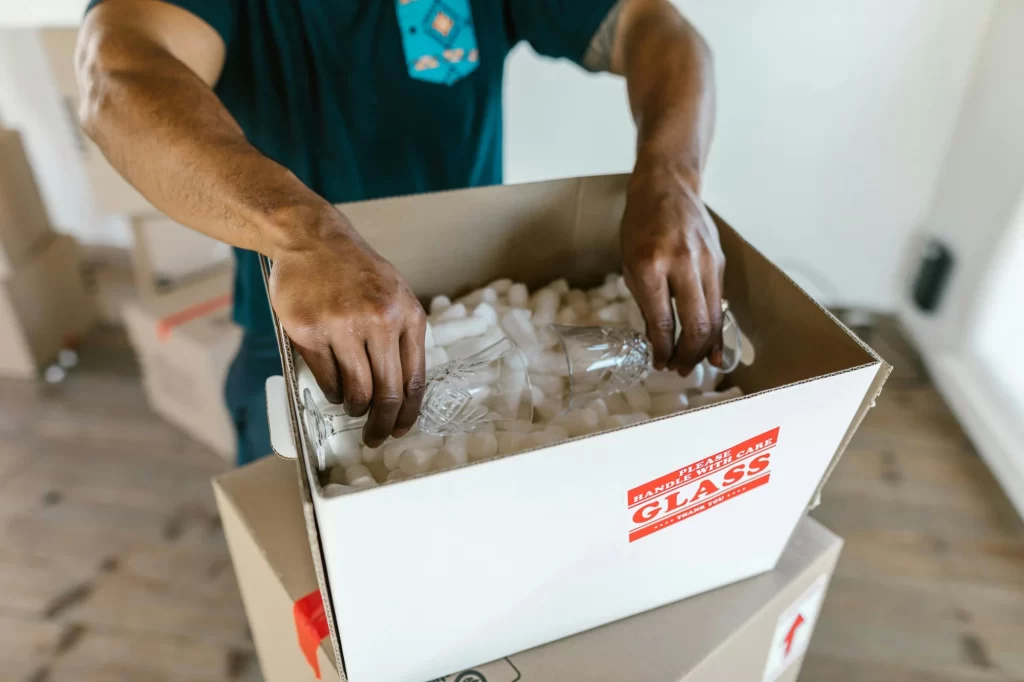
- Using newspaper — ink transfers and stains porous materials like unglazed ceramics
- Leaving air gaps in boxes — items shift and collide; always fill every gap
- Stacking heavy boxes on fragile ones — even with “Fragile” labels, this happens during chaotic loading
- Wrapping items in groups — every item must be wrapped individually
- Skipping the base reinforcement — the bottom of a box bearing weight needs double or triple tape
- Packing delicate items in oversized boxes — larger boxes invite heavier items to be stacked on top; use smaller, more manageable boxes for fragile goods
- Trusting old boxes — recycled boxes that have been folded and stored lose structural integrity
When to Call in Professional Packers
If you have high-value items, antiques, artwork, custom glassware, pianos, or irreplaceable heirlooms, the cost of professional packing is negligible compared to replacement cost. Professional packers carry the right materials in bulk, know how to construct custom internal frameworks for awkward shapes, and their work is typically covered under your moving insurance policy.
The hybrid approach for most long-distance moves: pack stout household items yourself, and turn over anything irreplaceable to the pros.
Packing Checklist for Long-Distance Relocation
Use this as your go-to reference before moving day:
- Double-walled boxes sourced (various sizes)
- Bubble wrap, foam sheets, and packing paper are stocked up
- High-quality tape and permanent markers are ready
- All fragile items sorted and grouped by category
- Each item is individually wrapped
- Boxes layered correctly (heavy base, light top)
- All gaps filled with packing material
- Every box is reinforced at the base with double tape
- All boxes are labelled on four sides with “FRAGILE” and the destination room
- Fragile boxes are loaded last and stacked only at the top level
- High-value items inventoried with photos taken before packing
Frequently Asked Questions
The safest approach combines individual wrapping, proper box selection, and strategic loading. Every fragile item should be wrapped separately in bubble wrap or foam, never grouped. Use double-walled boxes, fill all internal gaps with packing material, reinforce the base with double tape, and label boxes clearly on all sides. For long distance moves, the additional step of securing boxes against truck walls with tie-down straps is essential to prevent movement over hundreds of kilometres.
Professionals wrap each glass or stemware piece individually in bubble wrap or foam pouches. Glasses are typically placed upright (not upside down) in specially designed cell boxes with cardboard inserts that create individual compartments, preventing any contact between items. The base of the box is cushioned with several centimetres of crumpled paper, and the top layer is also padded before the box is sealed. For fine crystal, a second outer box is used for extra protection.
For high-value items, document everything with photographs before packing. Use purpose-built packaging where possible; artwork should travel in flat boxes with corner protectors; antiques may need custom timber crating. Check whether your moving company’s transit insurance covers the replacement value of your specific items, and consider a separate contents insurance policy for irreplaceable pieces. Carry small, highly valuable items (jewellery, documents, sentimental objects) with you personally rather than in the truck.
For most fragile items, the best combination is bubble wrap for primary protection and unprinted packing paper for gap-filling and secondary wrapping. Foam pouches are excellent for glassware and electronics. For extremely delicate pieces, foam sheets cut to size provide superior cushioning. Avoid newspaper (ink stains), plastic shopping bags (no cushioning), and thin single-wall boxes. Quality packing tape, not masking tape or low-grade sellotape, is non-negotiable for sealing and reinforcing boxes.
The most important technique is packing plates vertically, on their edges, like vinyl records. This distributes stress evenly across the plate rather than concentrating pressure on the flat face. Wrap each plate individually in bubble wrap or foam, place a foam sheet between each one, and fill any remaining space with packing paper. Pack dishes in smaller, manageable boxes. A box of dishes stacked horizontally and overfilled is one of the most common causes of breakage during moves.
It depends on the value and replaceability of your items. For everyday kitchenware, self-packing with the right materials is perfectly effective. However, for antiques, fine art, custom glassware, or any item that cannot be replaced, professional packing is strongly recommended. Professional movers carry specialist materials, custom cell boxes, foam-lined crates, and corner protectors, and their packing is typically covered under transit insurance. The cost of professional packing for a few key items is almost always less than the cost of replacing them.
Start packing fragile items at least two to three weeks before your moving date. This gives you time to source the right materials, pack methodically rather than in a rush, and avoid the last-minute corner-cutting that leads to breakage. Begin with items you use least: decorative pieces, seasonal tableware, artwork, and leave daily-use items for the final few days. Rushed packing is the single biggest cause of preventable damage during long-distance relocations.
Document the damage immediately, photograph both the damaged item and the condition of the box it arrived in, including any labelling. Report the damage to your moving company in writing as soon as possible; most companies have a claims window (often 7 to 30 days) that you must act within. Check your transit insurance policy for the claims process. If you used professional packers, the fault and liability typically rest with the moving company; if you packed the items yourself, coverage may be limited. Always keep your packing receipts as evidence of the materials used.
Both serve different roles and work best together. Bubble wrap provides the primary cushioning layer; its air pockets absorb impact and vibration during transit. Packing paper is used to fill gaps inside boxes, add a secondary wrapping layer, and prevent items from shifting. For most fragile items, the correct approach is to wrap the item in bubble wrap first, then use packing paper to pad the surrounding space inside the box. For delicate surfaces that could be scratched by bubble wrap texture (e.g., polished silver, lacquered ceramics), wrap in packing paper first, then add a bubble wrap outer layer.
Moving over long distances in NZ? Auckland Kiwi Movers offers packing services, including the handling of fragile items and a full-service move across the country. Contact our team for custom moving advice and a free quote.